
Ask any property management business owner about their biggest daily headache, and the answer is almost always the same: maintenance.
It is the source of the most tenant complaints, the most owner friction, and the most midnight phone calls. For many years, the industry consensus was to treat maintenance as a "necessary evil": a pass-through cost that was handled simply to keep the management contract alive. You paid the vendor, the owner paid you back, and you hoped no one was too upset in the process.
However, if you are looking at your business through the lens of a potential seller, that perspective needs to change. Maintenance is not a headache; it is a profit center waiting to be unlocked.
When a buyer looks at your portfolio, they aren't just looking at how many doors you manage. They are looking at the efficiency of your operations and the diversity of your revenue streams. By turning maintenance into a predictable, productized asset, you aren't just making your life easier: you are significantly increasing the value of your property management company.
Why Maintenance Drives Business Valuation
In the world of property management acquisitions, buyers typically focus on two primary metrics: EBITDA (Earnings Before Interest, Taxes, Depreciation, and Amortization) and ARPU (Average Revenue Per Unit).
A traditional management company that only collects a 10% management fee has a very "thin" ARPU. If that same company builds a maintenance profit center, they might add an additional $20 to $50 of profit per door, per month. When you apply a valuation multiple to that additional profit, the impact on your final sale price can be hundreds of thousands, or even millions, of dollars.
Buyers value maintenance profit centers because they represent sticky, recurring revenue. A well-run maintenance department suggests that your systems are mature and that you have a deeper relationship with your property owners. It moves the business away from being a "one-trick pony" and turns it into a comprehensive asset management firm.

Step 1: Productize the Service
The first step in turning maintenance into an asset is to stop thinking of it as "fixing things" and start thinking of it as a service product.
When you treat maintenance as a product, you give it a name, a price list, and a set of standards. This is often where owners make critical mistakes before selling; they leave the most complex part of their business undocumented and unpriced.
To productize maintenance, you should define:
- What you do: Are you coordinating third-party vendors, or do you have an in-house team?
- What it costs: Do you charge a coordination fee, a markup on invoices, or a flat monthly "maintenance protection" fee?
- The Service Level Agreement (SLA): How fast are emergencies handled? What is the turnaround time for a standard repair?
By defining these parameters, you create a "box" that a buyer can easily understand and take over. A buyer is much more likely to pay a premium for a "Maintenance Coordination Program" than for a "guy named Dave who fixes stuff when we call him."
Step 2: Choose Your Revenue Model
There is no "one-size-fits-all" model for maintenance profitability, but there are three common paths that buyers find attractive:
1. The Markup Model
This is the most common approach. You vet external vendors, manage the communication, and add a 10% or 15% coordination fee to the final invoice.
- Pros: Low overhead; no need to manage employees or trucks.
- Cons: Can be perceived as a conflict of interest by owners if not handled with total transparency.
2. The In-House Crew
You employ your own technicians and bill them out at an hourly rate that covers labor, overhead, and a healthy profit margin.
- Pros: Total control over quality and timing; highest potential for profit.
- Cons: High management intensity; increased liability; more difficult to scale.
3. The Subscription Model
You charge a flat monthly fee per door that covers 24/7 emergency coordination, annual inspections, and vendor vetting.
- Pros: Highly predictable, recurring revenue that buyers love.
- Cons: Requires a very high level of operational maturity to execute without losing money.
Whatever model you choose, the key is to ensure it is reflected clearly in your property management business valuation. A buyer needs to see that this income is consistent and defensible.

Step 3: Leverage the Tech Stack
If your maintenance process involves paper work orders, sticky notes, or a messy inbox, you are leaving money on the table: and scaring away sophisticated buyers.
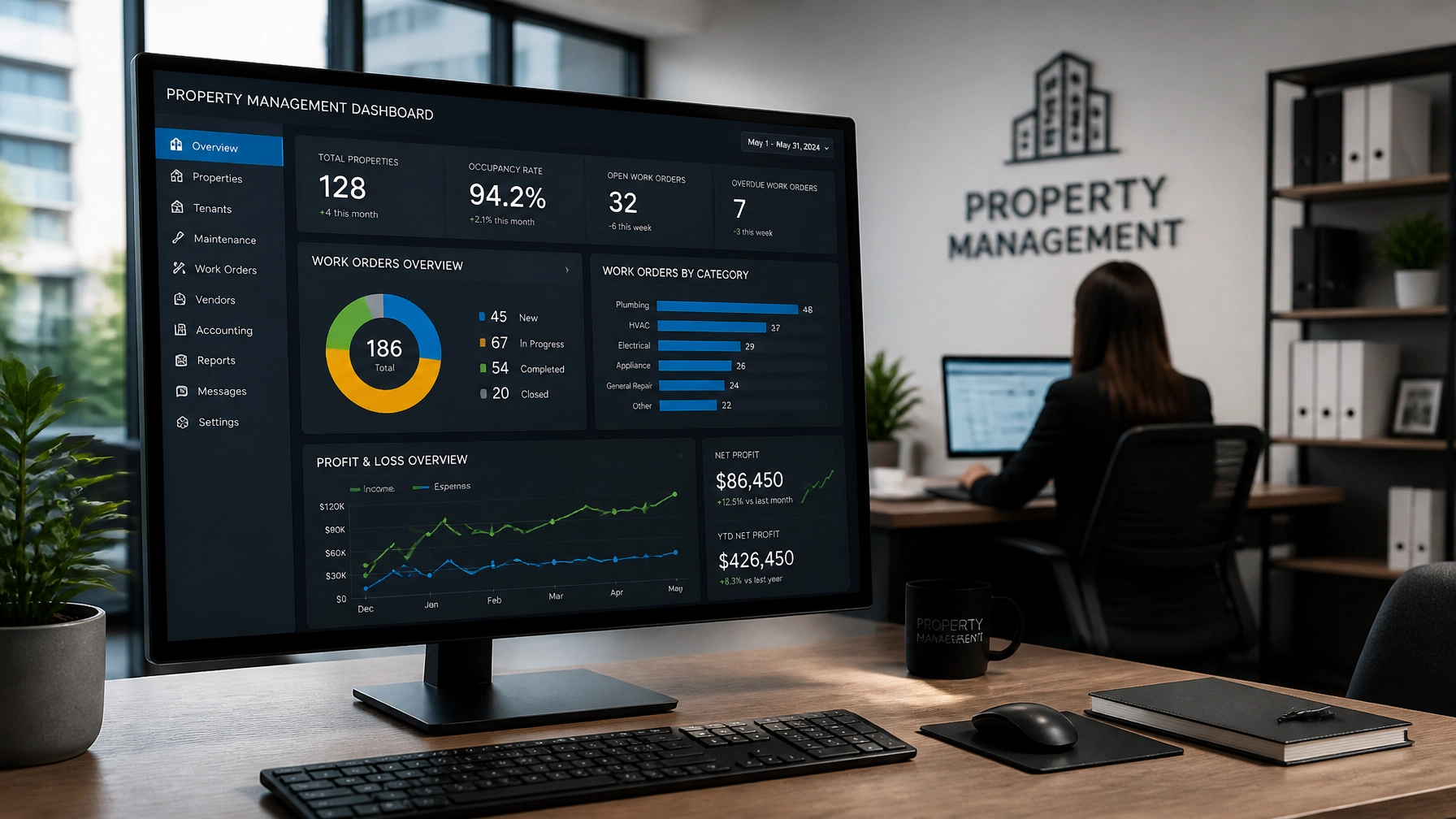
Modern buyers want to see data. They want to know your average "time to completion," your "first-time fix rate," and your "average cost per work order." Platforms like Property Meld or integrated features within your PM software (like AppFolio or Buildium) allow you to track these metrics in real-time.
Technology makes maintenance predictable. When you can show a buyer a report of 1,000 completed work orders with a 4.8-star tenant satisfaction rating, you have proven that your maintenance department is an asset, not a liability. It shows that the business can run without you personally overseeing every leaky faucet.
Step 4: Standardizing for the Handover
One of the biggest hurdles in selling a property management business is "owner dependency." If the maintenance department only works because you know which plumber to call and which HVAC guy is a flake, the business isn't sellable.
You must create Standard Operating Procedures (SOPs). Your SOPs should cover:
- How work orders are received and triaged.
- The approval thresholds (e.g., any repair under $500 is auto-approved).
- The vendor onboarding and vetting process.
- The billing and reconciliation workflow.
When you have these systems in place, you aren't just selling a portfolio of doors; you are selling a machine.

The Ethics of Maintenance Profitability
A common concern among owners is whether it's "right" to make money on maintenance. The reality is that coordination and maintenance management are valuable services. If you are providing a better experience for the tenant and protecting the owner's asset, you deserve to be compensated for that value.
The key to keeping owners happy (and keeping your business sellable) is transparency. Ensure your management agreements clearly state how maintenance is billed. When owners understand the value they are getting: vetted vendors, 24/7 coverage, and professional oversight: they are usually happy to pay for the peace of mind.
Preparing Your Maintenance Department for Sale
As you begin to think about an exit, take a hard look at your maintenance financials. Are they buried in your "General Management" income, or are they broken out as a separate line item?
To maximize your sale price, you should:
- Carve out the financials: Create a separate P&L for your maintenance activities.
- Clean up your vendor list: Ensure all vendors have current insurance and W-9s on file.
- Audit your contracts: Make sure your management agreements allow for the maintenance fees you are charging.
If you are unsure how your current maintenance setup impacts your business value, it may be time to consult with an expert. Organizations like PM Business Broker can provide industry-level insights into how buyers view these profit centers.

Conclusion: From Headache to Harvest
Turning maintenance into a value-adding asset is one of the most effective ways to prepare your property management company for a successful sale. It shifts the narrative from "I'm selling a job" to "I'm selling a profitable, scalable investment."
By productizing your service, choosing a clear revenue model, leveraging technology, and documenting your processes, you create a department that is not only more profitable today but significantly more valuable tomorrow.
When you are ready to see what your hard work is worth, the team at Vision Fox Business Advisors can help you perform a comprehensive valuation and guide you through the process of finding the right buyer for your legacy.
Don't let maintenance remain a headache. Turn it into the predictable asset that helps you cross the finish line of your business ownership journey.
{“@type”:”BlogPosting”,”image”:”https://cdn.marblism.com/7pArZty1835.webp”,”author”:{“name”:”Penny”,”@type”:”Person”},”@context”:”https://schema.org”,”headline”:”Making Maintenance Predictable: How to turn a maintenance department into a value-adding asset.”,”publisher”:{“logo”:{“url”:”https://sellmypropertymanagementbusiness.com/logo.png”,”@type”:”ImageObject”},”name”:”Sell My Property Management Business”,”@type”:”Organization”},”articleBody”:”Ask any property management business owner about their biggest daily headache, and the answer is almost always the same: maintenance. It is the source of the most tenant complaints, the most owner friction, and the most midnight phone calls. For many years, the industry consensus was to treat maintenance as a ‘necessary evil’—a pass-through cost that was handled simply to keep the management contract alive. You paid the vendor, the owner paid you back, and you hoped no one was too upset in the process. However, if you are looking at your business through the lens of a potential seller, that perspective needs to change. Maintenance is not a headache; it is a profit center waiting to be unlocked…”,”description”:”Learn how to transform your property management maintenance department from a cost center into a high-value profit center that increases your business sale valuation.”,”datePublished”:”2026-05-26″}