

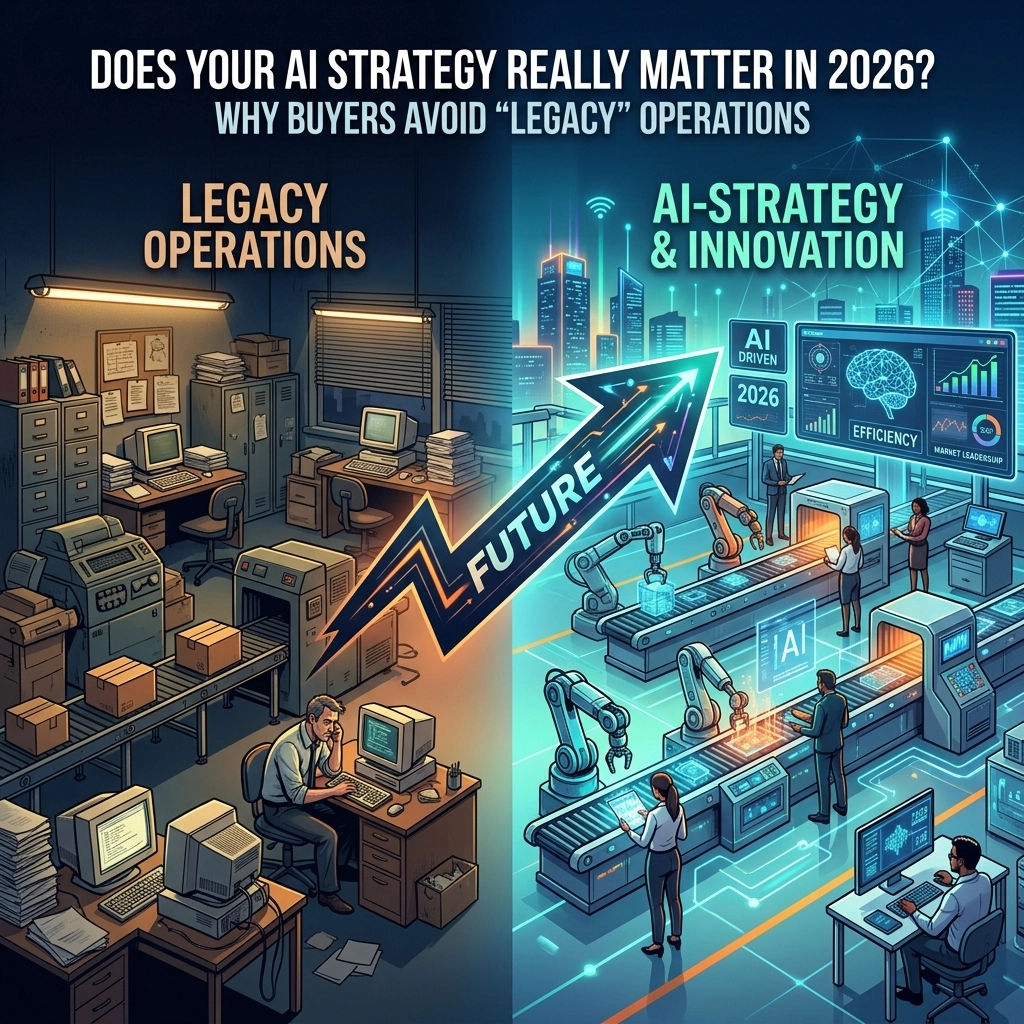
The landscape of property management has shifted fundamentally over the last three years. If you are sitting in your office today, looking at your 2026 growth projections, you’ve likely realized that the "old way" of doing things isn't just slower: it’s becoming a liability.
For many owners, the question of whether to sell their business often comes down to one thing: the energy required to keep up with the next wave of change. In 2026, that wave is defined by operational AI. It is no longer a futuristic concept; it is the standard operating procedure for the industry’s top performers.
If you are evaluating your next steps, you need to understand that buyers today aren't just looking at your door count or your management agreements. They are looking at your tech debt. They are looking at how much of your profit is tied up in manual labor that could: and should: be handled by intelligent systems.
The Definition of a "Legacy" Operation in 2026
To understand why buyers are becoming increasingly picky, we have to define what a "legacy" operation looks like in today's market. It isn't necessarily about how long you’ve been in business; it’s about how your business functions on a Tuesday morning.
A legacy operation is one where:
- Maintenance coordination still requires a human to play "phone tag" between a tenant and a vendor for basic repairs.
- Leasing inquiries sit in an inbox for three hours before a coordinator manually responds to schedule a showing.
- Data entry is still a primary job function for your administrative staff, rather than a background process handled by your software.
- Reporting requires manual spreadsheet manipulation to give owners a clear picture of their portfolio performance.
In 2026, professional buyers: especially those working with Vision Fox Business Advisors: view these manual processes as "friction." Friction costs money. It limits scalability. Most importantly, it creates a "rehab cost" for the buyer. If they have to buy your company and then spend six months overhauling your tech stack just to make it efficient, they are going to reflect that cost in a lower purchase price.
Why Buyers Are All-In on AI Strategy
When a sophisticated buyer looks at a property management company, they are buying future cash flow. They want to know that the profit margins they see today are sustainable and, ideally, capable of expanding.

1. Operational Efficiency and Margin Expansion
In the past, growing from 500 to 1,000 doors meant you had to hire more people. In 2026, a company with a robust AI strategy can often double its door count with only a marginal increase in headcount. Buyers love this. It means the "unit economics" of the business improve as it scales. If your business is still tethered to a 1-to-50 or 1-to-75 staff-to-unit ratio because of manual processes, you are viewed as a high-risk, low-margin acquisition.
2. Consistency and Reduced Human Error
AI doesn't forget to follow up on a 48-hour maintenance request. It doesn't skip a step in the move-out inspection workflow. Buyers are looking for businesses that have "institutionalized" their excellence through tech. They want a "business in a box" that runs the same way regardless of which staff member is sitting in the chair. This is a key part of what buyers look for in a property management business.
3. Data Integrity for Better Due Diligence
Modern AI-driven platforms maintain cleaner books and more accurate resident histories. When it comes time for due diligence, a tech-forward company can produce clean, verifiable reports in minutes. A legacy company often spends weeks "cleaning up the books" and chasing down missing documents. This delay can kill deals. Buyers in 2026 have no patience for messy data.
The "Modernization Trap": Should You Build It or Sell It?
This is the crossroads many owners find themselves at. You recognize that your business needs a digital transformation to stay competitive, but you aren't sure if you have the appetite to lead that change.
Modernizing a legacy operation requires three things:
- Capital: High-quality AI integrations and platform migrations aren't cheap.
- Culture Shift: Your team has to stop doing things "the way we've always done them."
- Time: It usually takes 12 to 18 months to fully realize the benefits of a tech overhaul.
If you are 24 months away from wanting to retire, spending those 24 months in the middle of a stressful software migration might not be the best use of your life. This is often one of the signs it’s time to sell your property management business.
If you don't want to be the one to implement the AI strategy, it is often better to sell now while your portfolio is still performing well, rather than waiting until your manual processes make you obsolete and drive your valuation down.
How AI Strategy Impacts Your Valuation Multiplier
In the world of business brokerage, we talk a lot about "multiples." While we avoid deep valuation theory, the practical application is simple: a more efficient business earns a higher multiple.
Imagine two companies, both managing 800 doors and both netting $400,000 in profit.
- Company A (Legacy): Relies on a large, high-tenure staff using manual workflows. Their overhead is high, and their growth has plateaued because the owner is "put out fires" all day.
- Company B (AI-Forward): Uses an integrated AI stack for leasing, maintenance triage, and collections. They have a smaller, more specialized team and a clear roadmap for adding another 200 doors without hiring.
A buyer will almost always pay a higher multiple for Company B. Why? Because Company B is "plug-and-play." The buyer can integrate Company B into their own platform with minimal friction. Company A, on the other hand, represents a "management project" that requires significant effort to modernize.

Preparing Your "Tech Story" for a Transition
If you are thinking about selling in the next 12 months, you don't necessarily need to have a fully autonomous AI office. However, you do need a "tech story." You need to be able to show a buyer that you aren't stuck in 2018.
Here is how you can prepare your technology narrative before hitting the market:
- Audit Your Current Stack: Are you using the latest versions of your property management software? Have you enabled the automated features that already exist within those platforms?
- Document Your Workflows: Even if they are manual, have them documented. A buyer can automate a documented process; they can't automate a process that only exists in your head.
- Clean Up Your Management Agreements: Ensure your contracts allow for digital signatures, electronic notifications, and tech-related fees. If your agreements are "legacy" paper documents that don't account for modern communication, they need to be updated. Check out our guide on preparing management contracts before selling.
- Assess Your Team's Tech Literacy: A buyer isn't just buying your doors; they are buying your people. A team that is comfortable with technology is a massive asset.
The Role of Advisory in the AI Era
Navigating the sale of a property management company in 2026 requires more than just a listing agent. You need advisors who understand the technical nuances of the industry. This is where firms like PM Business Broker and Vision Fox Business Advisors come into play.
They can help you look at your business through the eyes of a modern buyer. They can identify the "tech gaps" that might be holding back your valuation and help you decide if it’s worth fixing them before you sell or if you should price the business for a quick exit to a buyer who wants to handle the modernization themselves.
Final Thoughts: Don't Let "Good Enough" Cost You Millions
The most dangerous phrase in property management is "but it’s working fine for us."
Your manual processes might be working for you, but they aren't working for the buyer. In 2026, the market has no interest in buying "yesterday's business." Buyers want the future.

Whether you choose to embrace AI and scale your business for another five years, or you decide that this is the right moment to hand over the keys, make sure your decision is based on the reality of the 2026 market. Legacy operations are becoming a harder sell every single day.
If you are wondering where your business stands in today's tech-driven market, it may be time to have a confidential conversation about your options. Understanding your current position is the first step toward a successful exit that rewards you for the years of hard work you've put into your company.
Ready to see how your business stacks up in today's market? Contact us at Sell My Property Management Business to discuss your exit strategy.