
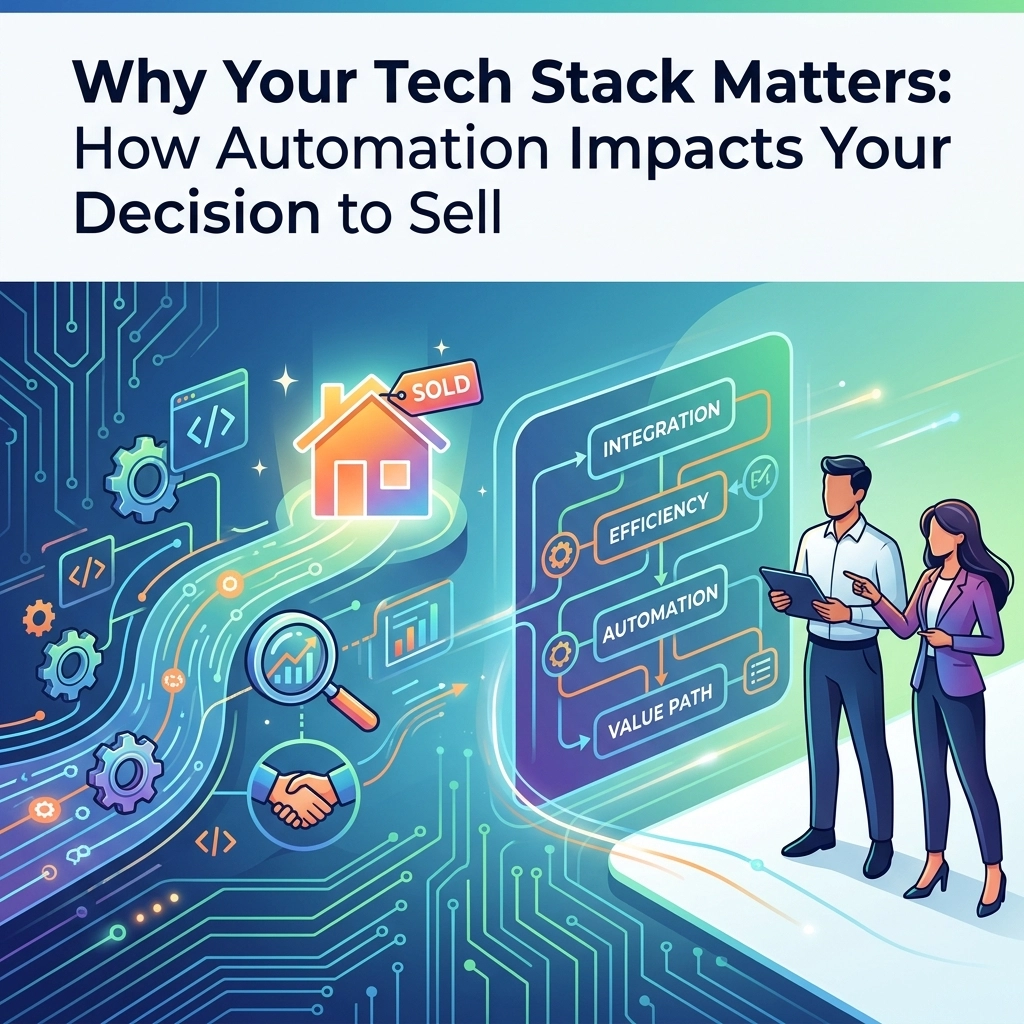
For years, property management was a "boots on the ground" business defined by paper checks, physical keys, and endless phone calls. If you have been in the industry for more than a decade, you remember the manual grind. But the industry has shifted. Today, your "tech stack": the collection of software and automated tools you use to run your business: is no longer just a convenience. It is a core pillar of your company’s value.
When you begin to wonder if it’s time to exit the industry, your tech stack should be one of the first things you evaluate. It shouldn't just be an afterthought in your preparation; it should be a central part of your strategy. A modern, automated system doesn't just make your life easier today: it dictates how attractive your business is to a buyer and, ultimately, how much they are willing to pay.
Efficiency and automation are the primary drivers of profitability in modern property management. If your business is still reliant on manual data entry and "tribal knowledge" held only in your head or the heads of long-term employees, you may find that why property management owners delay selling often comes down to the fear that the business can’t survive without them.
Automation as a Valuation Multiplier
When a buyer looks at your property management company, they aren't just buying a list of doors. They are buying a cash-flow engine. The more "human intervention" that engine requires to keep running, the riskier and more expensive it is for the buyer to operate.
Industry data suggests that organizations implementing deep system integrations and automation can see a significant decrease in operational costs: sometimes as much as 40%. For a property management firm, this translates directly to the bottom line.
A business that uses automation for rent collection, maintenance requests, and owner disbursements has higher margins than a firm doing these tasks manually. Because property management business valuation is heavily influenced by your SDE (Seller’s Discretionary Earnings) or EBITDA, every dollar saved through automation is essentially multiplied in your final sale price.

Decoupling the Owner from the Daily Grind
One of the biggest hurdles to selling a property management business is "Owner Dependency." If you are the only one who knows how to handle a specific vendor or if you have to manually approve every single maintenance invoice, your business is tied to your persona.
Automation solves this by creating repeatable, software-driven processes. When your tech stack handles the "heavy lifting," the business becomes a plug-and-play asset. Buyers, especially institutional buyers or larger firms looking to expand, want a business that can run on autopilot while they integrate it into their own operations.
If you find yourself feeling burnt out by the day-to-day fires, it might be one of the 3 signs it’s time to sell your property management business. However, if your tech stack is non-existent, you might need to spend six months automating key workflows before hitting the market to ensure you don't get penalized during the due diligence phase.
Data Integrity: The Buyer’s Best Friend
During a sale, a buyer will perform a deep dive into your books and your management agreements. This process can be grueling. If your data is scattered across spreadsheets, paper files, and different software platforms, you are setting yourself up for a headache.
A centralized, automated tech stack provides "clean" data. Buyers love to see:
- Automated Ledger Accuracy: No manual "adjustments" that need explaining.
- Transparent Maintenance History: Every work order tracked from inception to completion.
- Resident Retention Metrics: Automated reporting that shows exactly how long tenants stay.
- Consistent Fee Collection: Evidence that late fees and ancillary fees are applied automatically and consistently.
When your data is clean and easily exportable, it builds trust. High trust leads to faster closings and fewer "price chips" during the final negotiations. If you’re unsure how your current setup looks to an outsider, consulting with a firm like Vision Fox Business Advisors can help you see your business through the eyes of a professional acquirer.

Scalability and Future-Proofing
A potential buyer isn't just looking at what you did last year; they are looking at what they can do with the business next year. A manual business is difficult to scale. To add 100 doors to a manual operation, you might need to hire two more people. To add 100 doors to an automated operation, you might only need to adjust your software subscription.
This scalability is a major factor in what buyers look for in a property management business. A modern tech stack demonstrates that your infrastructure is future-ready. Whether it’s AI-driven lead nurturing or automated resident benefit programs, these tools signal to a buyer that they won't have to spend the first year of ownership overhauling your outdated systems.
Common Tech Stack Mistakes Before Selling
Many owners realize too late that their tech choices are hindering their exit. Avoid these common pitfalls as you prepare your company for a transition:
- Fragmented Systems: Using five different apps that don't talk to each other. This creates "data silos" and makes it impossible for a buyer to get a clear picture of the business.
- Proprietary/Homegrown Software: You might think your custom-coded database is a "secret sauce," but to a buyer, it’s a liability. They want industry-standard tools (like AppFolio, Buildium, or RentVine) that are easy to support.
- Lapsed Software Updates: Running an old version of a server-based software instead of a cloud-native solution.
- Poorly Organized Management Agreements: Not having your digital contracts organized and easily accessible for review. You can learn more about preparing management contracts before selling to avoid last-minute delays.

Is Your Tech Stack Ready for an Exit?
If you are evaluating whether to sell, take a hard look at your current workflows. Ask yourself: “If I left for a month, would the software keep the business moving, or would it all fall apart?”
If the answer is that it would fall apart, you have an automation problem. Addressing this now: even if you don't plan to sell for another two years: will pay dividends. It increases your current profitability and ensures that when the "clock decides" it's time for you to move on, you have a valuable, streamlined asset to offer the market.
Preparing for an exit is a journey. It involves cleaning up financials and organizing every facet of the operation. Your tech stack is the glue that holds those financials and operations together.
Taking the Next Step
Deciding to sell your property management company is one of the biggest decisions you will ever make. It is emotional, complex, and requires a clear-eyed look at what you’ve built. Don't let an outdated tech stack be the reason you leave money on the table.
If you’re ready to see how your current operations and automation stack up in the current market, we can help. Understanding your value is the first step toward a successful transition. Whether you are ready to list today or just want to start exit planning for property management business owners, getting an expert perspective is vital.
For professional guidance on the brokerage process, you can also explore resources at PM Business Broker to see how portfolios like yours are currently being positioned for sale.
Are you curious about what your business is worth in today's automated market?
Contact us today to start a confidential conversation about your goals.