
You’ve spent years: maybe decades: building your property management business. You’ve survived midnight maintenance calls, difficult tenants, and the constant juggle of owner expectations. Now, you’re starting to think about what’s next.
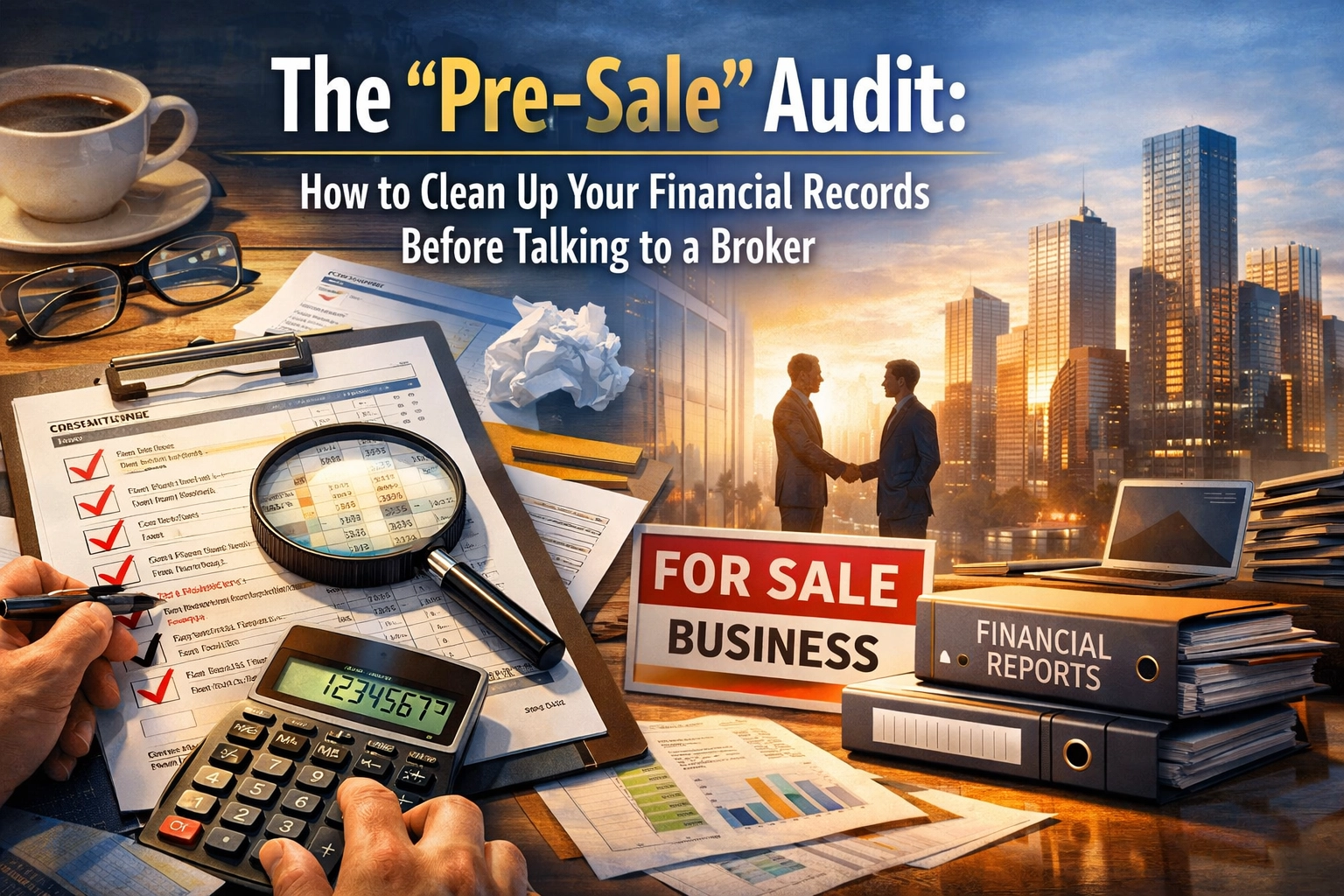
Whether you’re looking to retire or just want to move on to your next venture, the thought of selling is exciting. But before you pick up the phone to call a broker or start chatting with a local competitor, there is one critical step most owners overlook: the financial "Pre-Sale" audit.
Think of this as a dress rehearsal. You wouldn't put a house on the market without cleaning the carpets and touching up the paint, right? Your financial records are the "curb appeal" of your business. If they look messy, buyers will assume the operation is messy too.
In this guide, we’re going to walk through how to scrub your books so that when you’re ready to talk to the pros at Vision Fox Business Advisors, you’re coming from a position of absolute strength.
Why "Clean" Records Actually Increase Your Multiples
In the property management world, buyers aren’t just buying your doors; they are buying your cash flow and the predictability of that cash flow. If your Profit and Loss (P&L) statements are a tangled web of personal expenses, inconsistent classifications, and missing entries, a buyer sees risk.
When a buyer sees risk, they do one of two things: they lower their offer or they walk away.
A pre-sale audit is a proactive review of your financial records, legal documents, and operational data. By doing this before you enter the market, you can fix red flags that would otherwise kill a deal during due diligence. Clean books signal discipline and professionalism, often leading to higher valuation multiples and faster closing times.
Step 1: The Three-Year Look Back
Most serious buyers and brokers will want to see at least three years of clean financial history. They are looking for trends. Are your margins growing? Is your labor cost as a percentage of revenue staying stable?
Review your P&Ls and Balance Sheets for the last 36 months. Look for:
- Consistency: Are you categorizing your software subscriptions in the same place every month?
- Revenue Recognition: Ensure you are recording management fees, leasing commissions, and maintenance markups correctly.
- GAAP Compliance: While you don’t need to be a CPA, aligning your statements with Generally Accepted Accounting Principles (GAAP) increases your credibility with institutional buyers.
If you’ve been "loose" with your bookkeeping because you were the only one looking at it, now is the time to tighten up. If you're wondering where you stand, it might be worth checking out how to value a property management company to see how these numbers drive the ultimate price.

Step 2: The Art of the "Add-Back" (Normalizing EBITDA)
Most small to mid-sized property management companies are "lifestyle" businesses. This means you likely run some personal expenses through the company: your car, your cell phone, maybe that trip to a conference that was 20% business and 80% vacation.
This is perfectly normal, but these expenses hide your true profitability.
To get a real valuation, you need to calculate your Normalized EBITDA (Earnings Before Interest, Taxes, Depreciation, and Amortization). This involves identifying "add-backs": expenses that a new owner wouldn't necessarily have to pay.
Common PM add-backs include:
- Owner’s salary (above or below market rate).
- Personal vehicle leases or fuel.
- One-time legal fees (like that one-off lawsuit from three years ago).
- Discretionary bonuses.
- Home office expenses.
Having a clear, documented list of these add-backs ready for your broker will prevent a lot of headaches later. It’s one of the most common mistakes PM owners make before selling: failing to prove where the money actually went.
Step 3: Scrubbing the Balance Sheet
The P&L gets all the glory, but the Balance Sheet is where the skeletons live. Buyers will look at your liabilities very closely.
- Escrow and Trust Accounts: In property management, this is the big one. Your trust accounts must be reconciled to the penny. Any discrepancies here are an immediate red flag for a buyer. It suggests poor internal controls and potential legal liability.
- Debt Schedules: List out all equipment leases, vehicle loans, and lines of credit. Be prepared to explain how these will be handled at the time of sale.
- Accounts Receivable: If you have 90-day-old management fees that you’re never going to collect, write them off now. Don’t let a buyer see a "bloated" AR that isn't real.
Step 4: The Management Agreement Audit
While not strictly a "financial" record, your management agreements are the source of all your revenue. A buyer’s attorney will go through these with a fine-tooth comb.
You need to ensure that your contracts are:
- Signed and Current: You’d be surprised how many owners have "handshake" deals or expired contracts.
- Assignable: Does your contract allow you to transfer the agreement to a new owner without the landlord’s written consent? If not, you may have a major hurdle during the sale.
Fixing these agreements is a core part of exit planning for property management business owners. It’s much easier to get an amendment signed while you’re still "the boss" than it is when you’re in the middle of an escrow period.

Step 5: Document Your Internal Controls
A buyer isn't just buying your current profit; they are buying the system that produces that profit. If all the financial knowledge lives in your head (or your long-term bookkeeper’s head), the business is risky.
Create a simple document that outlines:
- How rent is collected and processed.
- Who approves maintenance invoices.
- How owner draws are calculated and sent.
- How you handle security deposit reconciliations.
Documented processes show that the business can run without you. This is the key to growing a property management business without becoming the bottleneck, and it’s equally important when you're ready to exit.
The Timeline: When Should You Start?
Ideally, you should start this "Pre-Sale Audit" 12 to 24 months before you plan to list the business.
Why so early? Because if you find an issue: like a declining margin or a messy trust account: you need time to fix it and show at least a year of "clean" history. A two-year track record of clean, improved financials is worth significantly more than a three-month "sprint" of good behavior right before a sale.
Waiting until the last minute is a gamble. We call it the quiet risk of waiting too long to plan your exit. The more time you give yourself, the more leverage you have in negotiations.
Organizing Your "Data Room"
Once you’ve done the hard work of cleaning everything up, put it in a secure digital folder (a "Data Room"). Structure it logically:
- Folder 1: Financial Statements (P&Ls, Balance Sheets, Tax Returns).
- Folder 2: Management Agreements (Sorted by property type or size).
- Folder 3: Employee and Contractor Records.
- Folder 4: Operations Manuals and Tech Stack Info.
When a broker or a serious buyer asks a question, and you can provide a clean, professional document in five minutes, your value goes up in their eyes. It shows you are prepared, organized, and serious about the deal.
Summary Checklist for PM Owners
Before you take the leap, run through this quick list:
- Do I have 3 years of P&Ls and Balance Sheets ready?
- Are my trust accounts reconciled and "clean"?
- Have I identified all my personal "add-backs"?
- Are my management agreements signed and assignable?
- Have I documented my basic financial workflows?
If you’re feeling overwhelmed by the process, you don't have to do it alone. Many owners find that working with a specialized advisor, like Vision Fox Business Advisors, helps them identify these issues early so they can maximize their exit.
Selling your property management business is a massive milestone. Don't let a messy spreadsheet get in the way of the legacy you’ve worked so hard to build. Start your audit today, and you’ll be in a much better position when the right buyer comes knocking.
If you're still wondering if now is the right time, take a look at these 3 signs it’s time to sell your property management business. It might be the clarity you need.